Question: Do you have any case studies available?
Answer: Yes See our Internet Marketing Case Studies at this link >>>> Case Studies
Question: What is your pricing structure?
Answer: See our internet marketing pricing at this link >>>> Price Structure
What is Digital Marketing?
Digital marketing is the skill of promoting of products and services utilizing digital channels such as the internet, social media, mobile apps and email. Digital marketing uses technology and data to connect with potential customers, promote brands, influencing business outcomes such as brand awareness, lead generation (lead gen), and customer loyalty.
Unlike traditional marketing techniques, digital marketing allows businesses to accurately target audiences and track advertising effectiveness and conversions.
Examples of digital marketing strategies
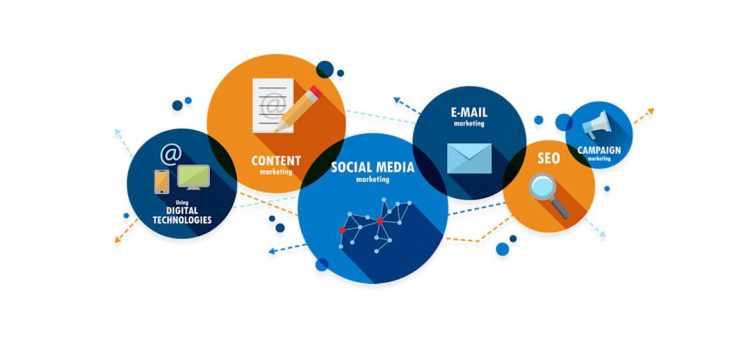
Search Engine Optimization (SEO): Optimizing content to rank higher in search engine results.
Content Marketing: Creating and distributing valuable content to attract and retain a defined audience.
Social Media Marketing: Using social media platforms to connect with audiences, build brand awareness, and drive traffic.
Email Marketing: Sending promotional messages or newsletters to a list of subscribers.
Paid Advertising (PPC): Placing ads on search engines or social media platforms, often on a pay-per-click basis.
What are the types of Digital Marketing?
The main types of digital marketing include Search Engine Optimization (SEO), Email Marketing, Pay-Per-Click (PPC) advertising, Social Media Marketing, Content Marketing and Affiliate Marketing. Other common types are Influencer Marketing, Video Marketing, and Conversion Rate Optimization (CRO), all of which use online vehicles to promote products or services.
The Core types of digital marketing?
Search Engine Optimization (SEO): The process of optimizing a website to rank higher on search engine results pages (SERPs) for relevant keywords and user intent.
Pay-Per-Click (PPC) Advertising: Running ads on platforms like Google or social media, where you pay each time a user clicks on your ad. The average cost per click on Meta Ads platform is £3.62 but this is variable based on the category, e.g. finance and the accuracy of the targeting. Funnels are also used in conjunction with user search intent and the language and tone of the content can differ depending on the customers predicted stage in the buying cycle e.g. Top of Funnel (research) Middle of Funnel (intent to move closer to a purchase) Bottom of Funnel (Ready to purchase).
Content Marketing: Creating and distributing valuable content, such as blog posts, articles, and videos, to attract and retain a well defined audience.
Social Media Marketing: Using social media platforms to build brand awareness, engage with customers, and drive traffic or sales. This can be both organic (non-paid) and paid PPC.
Email Marketing: Sending targeted emails to a list of subscribers to promote products, share updates, and build customer relationships.
Define what SEO is.
SEO, or Search Engine Optimization, is the practice of optimizing a website to improve its visibility and ranking in search engine results for “organic” traffic as well as map listings which certify a possible bricks and mortar location for the business. It involves improving a site’s content, technical structure, and authority to increase its relevance to search engines, with the goal of driving more visitors to the site and potentially qualifying those customers if required.
How SEO works
Understanding user intent: SEO involves understanding what people are searching for, the words they use, and the type of content they want to find.
Content optimization: Creating high-quality content that is helpful, relevant, and uses the vocabulary of the target audience. This includes text, images, and other media.
Technical optimization: Improving the website’s structure and performance so search engine crawlers can easily find, understand, and index the content.
Building authority: Earning high-quality backlinks from other reputable websites to show search engines that your site is a trusted and authoritative source.
Strategic alignment: Aligning a website with search engine algorithms by following their guidelines and best practices to be understood and ranked.
Explain Keywords in Digital Marketing.
Keywords are words and phrases people type into search engines to find information, and they are crucial in digital marketing for optimizing content to match user intent and improve visibility. By strategically incorporating keywords into website content, marketers can improve search engine optimization (SEO) rankings, attract a more relevant audience, and increase engagement and the potential conversions purchases or webform submissions etc.
How important is it for SEO implimentation?
To connect with your audience: Keywords help you speak the language of your target market and create content that matches their search intent.
To guide search engines: They signal to search engines what your content is about, which helps them rank your pages for relevant searches.
To improve search rankings: By using the right keywords, you can appear higher in search engine results pages (SERPs), which increases your visibility.
To drive qualified traffic: Ranking for relevant keywords attracts users who are already interested in what you offer, leading to more qualified website visitors.
To boost business results: The right keywords can lead to increased time on site, more leads, and ultimately, more conversions and sales.
What is on-page and off-page optimization?
On-page optimization: This refers to all optimizations that can be made directly on your website to improve its ranking and visibility for specific keywords, through code, content, website infrastructure, software integrations and other less well known strategies.
Content: Creating high-quality, relevant content that satisfies user search intent is the foundation of on-page SEO.
Keywords: Strategically incorporating target keywords into the content, headings, and titles.
Title tags and meta descriptions: Optimizing these for search results pages, including keeping title tags to around a certain level of characters and placing keywords in strategic locations.
Internal linking: Linking related pages within your own website to improve navigation and help search engines understand your site structure.
Technical elements: Optimizing images with alt-text, ensuring fast page load times, and using clear, short URLs.
What is the difference between Direct Marketing and Branding?
Direct Marketing
Goal: To get a specific, measurable response from a target audience, such as a purchase, sign-up, or enquiry.
Timeline: Short-term, with an emphasis on immediate action.
Key elements: A direct offer, a clear call-to-action (CTA), and a method to track performance.
Examples:
Sending a promotional email with a “buy now” link.
Running paid ads on social media with a specific offer.
Mailing a catalog with an order form.
Measurement: Highly measurable, with clear metrics like conversion rates, click-through rates, and cost per acquisition (CPA).
Branding
Goal: To build a long-term emotional connection, reputation, and recognition for the company, its values, and its promise.
Timeline: Long-term, building momentum over time.
Key elements: Consistent visuals, tone, and storytelling that shape how the brand is perceived.
Examples:
Sponsoring a local sports team.
Creating valuable content like blog posts or podcasts.
Developing a strong logo and brand identity.
Measurement: More nuanced and harder to measure directly, focusing on metrics like brand awareness, customer lifetime value, and brand sentiment.
How they work together
A strong brand creates the foundation of trust and recognition that makes direct marketing more effective.

Difference between SEO and SEM.
SEO is a long-term strategy that uses highly skilled and time served, tested and latest methods to improve a website’s visibility in search results, while SEM is a broader term that includes both paid and unpaid tactics to increase a website’s visibility, with the paid component often being the primary focus. The main difference is that SEO relies on organic traffic and visibility, and SEM (Search Engine Marketing) encompasses paid efforts like pay-per-click (PPC) ads in addition to organic SEO tactics.
How do you use social media for Marketing?
To use social media for marketing, you must first define your goals and target audience, then choose the right platforms, and finally, create a consistent, engaging content strategy that includes interaction and analysis.
- Plan your strategy
Set clear goals: Determine what you want to achieve, such as increasing brand awareness, generating leads, driving website traffic, or improving customer service.
Identify your target audience: Understand their demographics, interests, and behaviors to tailor your content and messaging effectively.
Research competitors: Analyze your competitors’ social media strategies to identify opportunities and learn what works for them.
Choose the right platforms: Focus on 2-3 platforms where your audience is most active, rather than trying to be everywhere at once.
Define your brand voice: Establish a consistent tone and style for your brands communication across all platforms. - Create and share content
Develop a content calendar: Plan your posts in advance to ensure consistency.
Produce high-value content: Create content that educates, entertains, or provides value to your audience. Use a mix of images, videos, and text.
Optimize profiles: Ensure your social media profiles are complete, visually appealing, and use relevant keywords to improve discoverability.
Be consistent: Post regularly to keep your audience engaged.
Use the tools: Post simultaneously across platforms - What are the 3 ingredients of Digital Marketing?
The three essential “ingredients” of digital marketing are content, channel, and strategy, though other sources emphasize different but related components like searchability, conversion, and customer retention. Content is the messaging, channels are the platforms (like social media or search engines), and strategy is the overall plan that defines how to use content and channels to achieve goals like brand awareness or sales.
Core components of digital marketing
Content: This is the information you create and share to attract and engage your audience. It includes everything from blog posts and videos to social media updates and ad copy.
Function: Content is the backbone of your efforts. It informs, entertains, and persuades your target audience, and is essential for building trust and relationships.
Examples: A well-written blog post, a compelling video, a detailed product description, or a emotionally engaging social media graphic.
Channel: These are the online platforms and methods you use to distribute your content and reach your audience.
Function: Channels are the pathways to your customers. They enable you to connect with your audience where they spend their time online.
Examples:
Search Engine Marketing (SEM): Using paid ads on search engines like Google.
Social Media Marketing (SMM): Using platforms like Facebook, Instagram, and LinkedIn to build a community and share content.
Search Engine Optimization (SEO): Optimizing your website to rank higher in search results.
Strategy: This is the overarching plan that connects your content and channels to your business goals.
Function: Strategy provides direction, ensuring your efforts are focused and effective rather than random.
Key elements: A good strategy involves defining your audience, setting clear objectives, and deciding how to best use your content and channels to achieve them. It also involves analyzing performance and making adjustments.
Alternative frameworks
While the “content, channel, strategy” framework is common, other models break down digital marketing into different, yet related, core components.
Searchability, conversion, and customer retention: This model focuses on the customer journey, by using CRMs (customer relationship management) etc
Conversion: Turning visitors into customers (effective high converting website and landing pages).
Searchability: Making your brand easy to find (SEO, SEM).
Customer retention: Keeping customers engaged and loyal after their initial purchase and lead them to make higher ticket purchases.
Are you integrating Ai Agent2Agent (A2A) future proofing for customers?
In a word yes.
We are actively using staging procedures and safely upgrading outdated PHP Versions and other security measures to facilitate the integration of Agent Card generation, A2A metadata, JSON-LD/schema
AI endpoints and so forth which will future proof websites for Agent to Agent search.
We will still use traditional search standards for Organic and Google Listing visibility for the foreseeable future.
Full Agent to Agent search acceptance and usage will be some time away yet.
AI, Contextual Search, and Agent-to-Agent Discovery
AI is redefining search, moving it beyond a keyword-centric process to a meaning-, intent-, and context-aware experience. Instead of merely finding keywords within a page, AI-powered systems understand context by analyzing topics, relationships between concepts, entities, user intent, and the overall content environment to gauge its relevance and authority.
As search technology evolves, the typical user will be interacting with an AI assistant, not a conventional search interface. These AI assistants will be able to find, evaluate, and synthesize information for you. Furthermore, nascent Agent-to-Agent (A2A) protocols allow AI systems to securely share structured information between them and with trusted AI services. With Google’s investment in AI Search, Gemini, and open standards for AI agents, we anticipate a future where AI agents will find information primarily from authoritative sources, rather than simply relying on search engine rankings.
This shift amplifies the importance of your organisation’s knowledge base. Instead of seeing a website as a set of separate pages, AI will increasingly view it as a knowledge repository with clear topical and entity structures. Content should be organized around these topics, entities, services, and relationships to communicate what your organization does and how different concepts relate to each other within your business. By maintaining a structured knowledge base, incorporating schema, and structuring your content consistently, you ensure AI agents have reliable information to use when generating responses.
For these reasons, content clarity, readabilty and topical relevance should take precedence over keyword targeting and traditional ranking factors. A clear heading structure, well-written, authoriative content, and use of descriptive subheadings are critical for helping both humans and AI understand what’s on the page. The better an AI can understand and contextually relate information on your site, the more confidently it can surface it to users searching for those concepts.
Don’t be mistaken: AI optimisation (AiO) doesn’t replace traditional SEO; it builds on it. The foundational principles of a well-optimised website – technical performance, high-quality content, and robust information architecture – are now being enhanced with semantic optimisation and machine-readable content. Organisations already doing great work in SEO are ahead of the curve when it comes to AiO.
Optimising your homepage has become critically important since this is often the first point of contact through which an AI system forms a conceptual understanding of your brand, its services and geographic area. It’s a vital step toward getting AI agents to include your site in their knowledge graph and to understand your brand contextually. Ensure this experience is well-supported with clear navigation, effective internal linking, a consistent understanding of your entity relationships, and detailed schema.org markup.
Website technical performance is as important as ever. Providing quick, reliable hosting with the support of a Content Delivery Network (CDN), image optimization, and efficient caching are all essential for ensuring both users and search engine bots (including AI agents) have an excellent experience. Since AI agents are often retrieving data in real time, site speed is directly linked to how quickly they can discover and utilize your content.
While JavaScript rendering capabilities of search engines and AI assistants are steadily improving, you should avoid building critical page elements using purely client-side rendering. Core content must be readily available for initial page load or provided via server-side/hybrid rendering so search engine bots, and ultimately AI, can interpret it efficiently.
As Google continues to blend AI Search with Gemini and develops more capable Agent-to-Agent capabilities, it’s imperative to think beyond website optimisation. The strategic goal now is to create a digital knowledge ecosystem that can be effectively consumed by both search engines and the new breed of intelligent AI agents. Businesses that invest in structured knowledge bases and create semantically optimised, technically proficient online environments will remain visible in the evolving AI landscape.